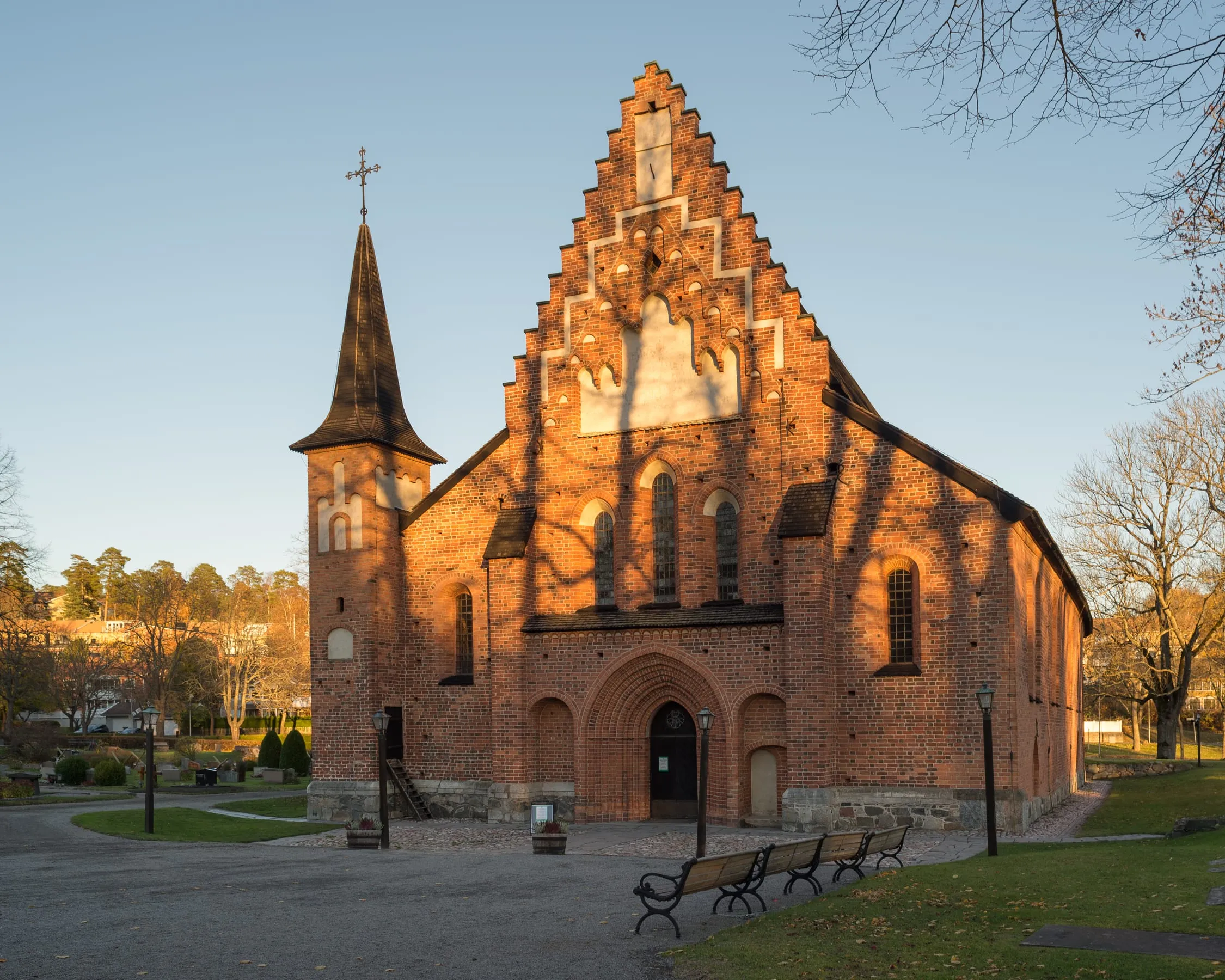
St Mary's (Mariakyrkan)
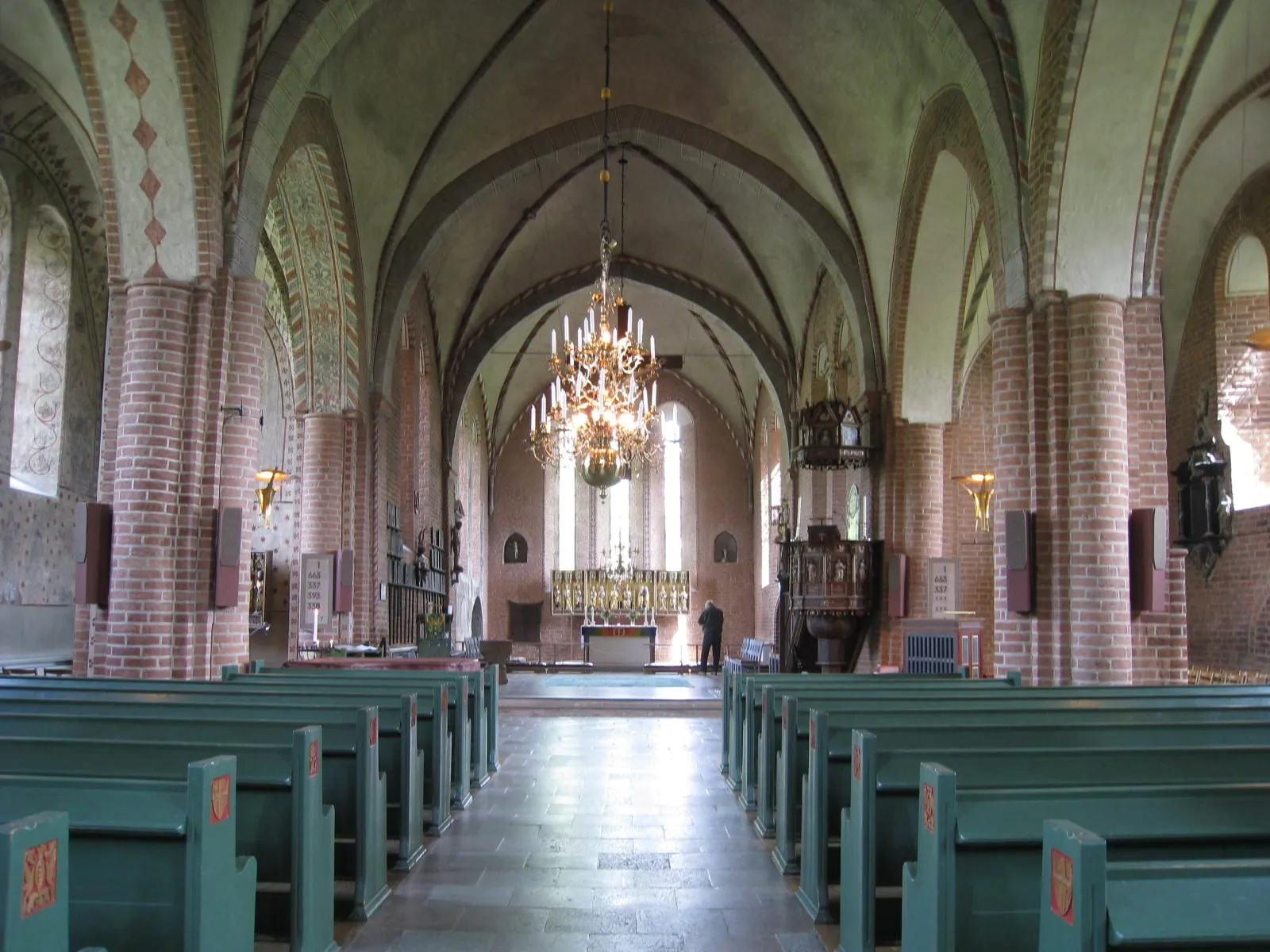
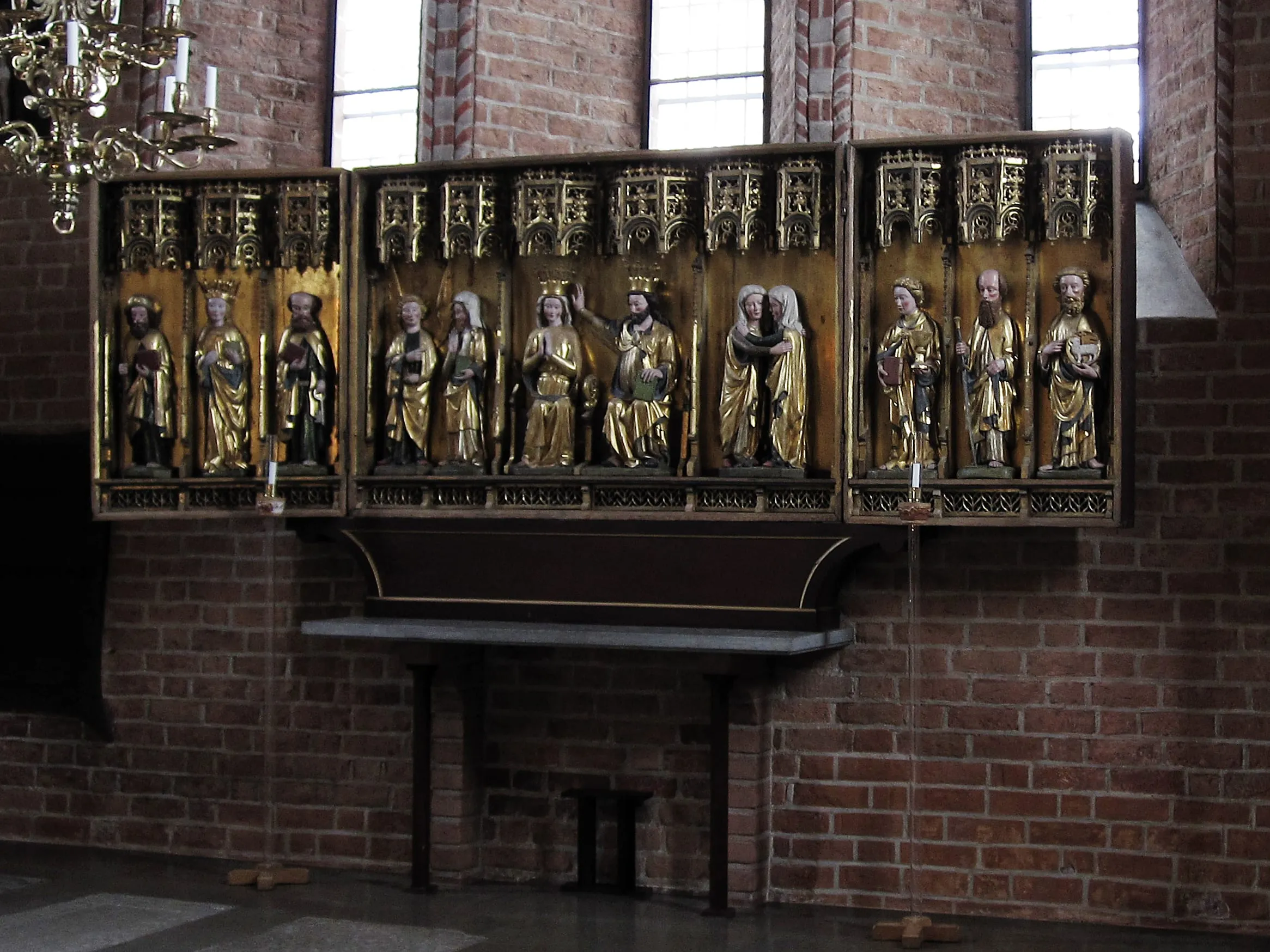
St Mary's was built in brick in the 13th century as the church of the Dominican friary, the first brick in the Mälaren valley. After the Reformation it became the town's parish church, and it still is: the oldest building in Sigtuna in daily use. Go in when it is open. The wall paintings, the altarpiece and the space are nothing like the Romanesque ruins around it. Concerts all year, see the calendar. The bell tower on Klockbacken burned in 2016 and has been rebuilt. Beside the church lie the herb garden, kept by a society in memory of the friars' plantings, and the low walls of the friary.
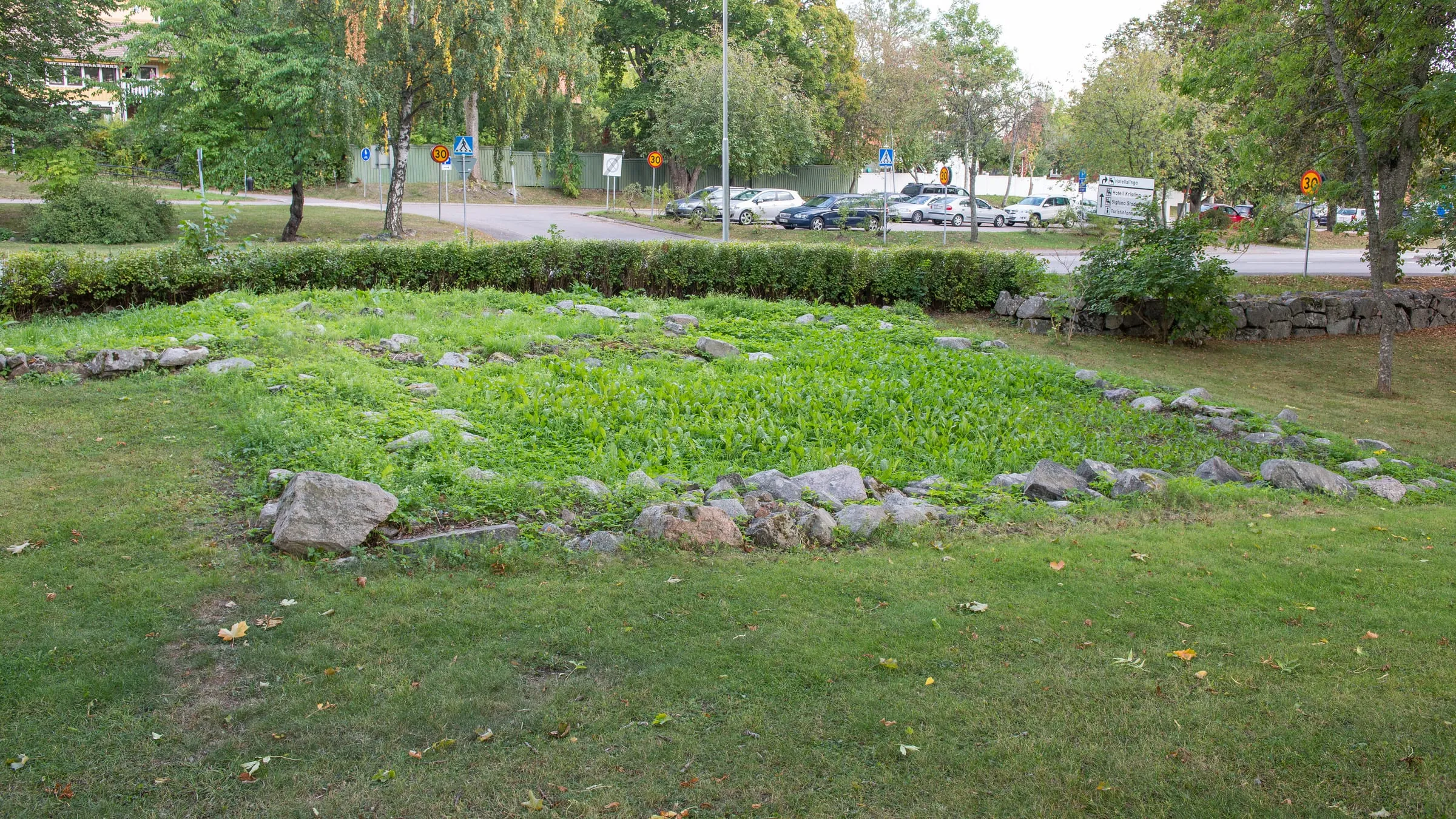
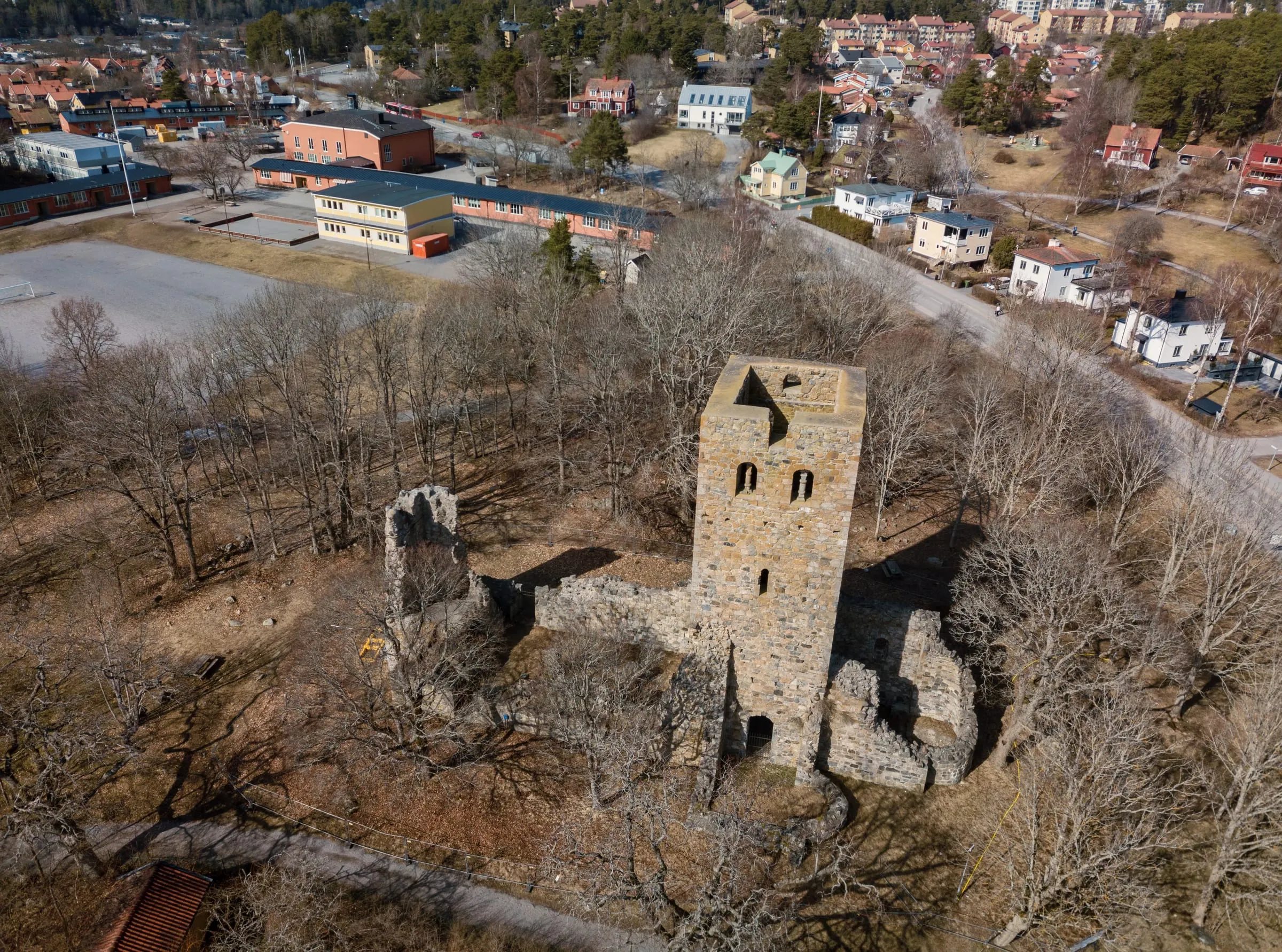
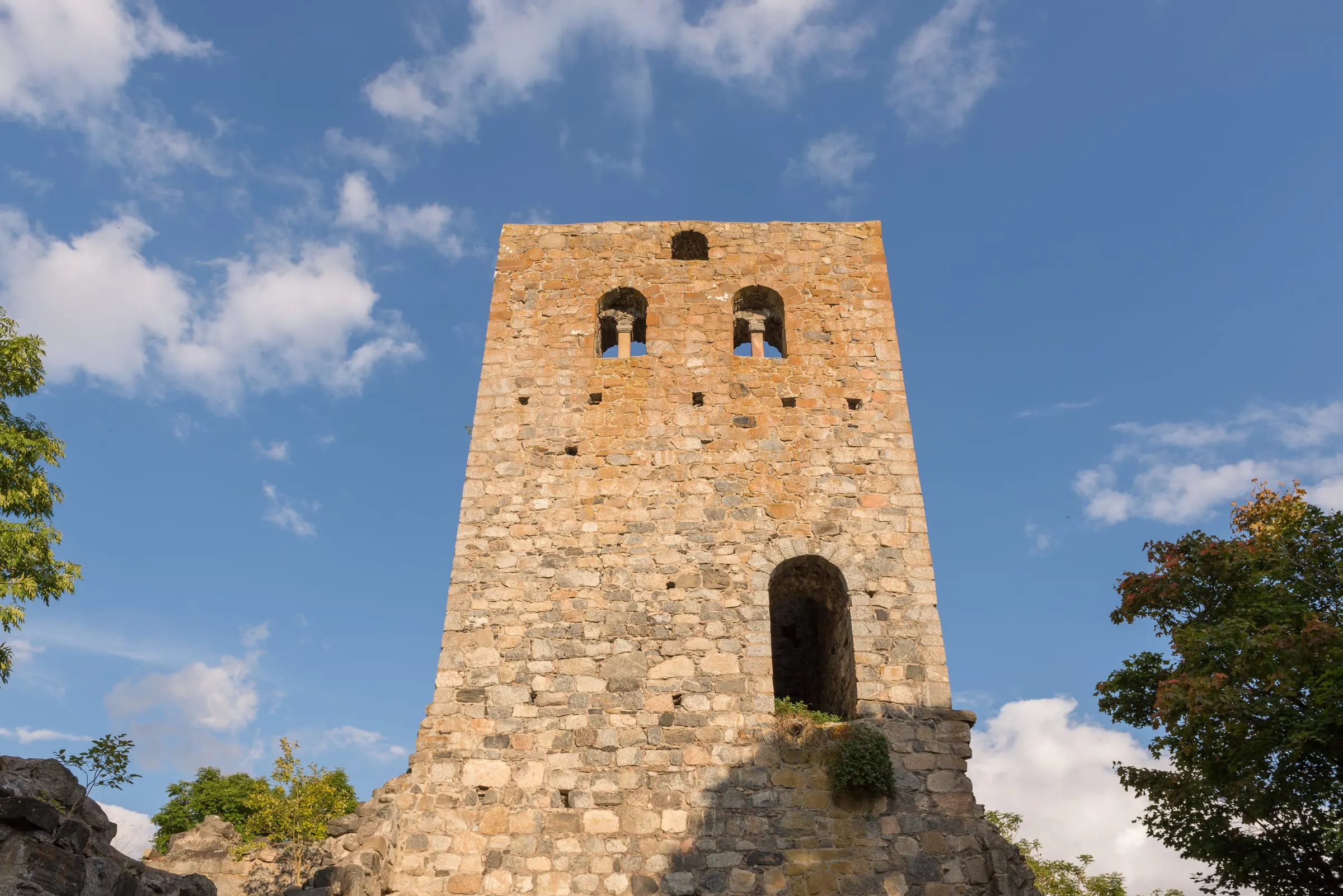
St Peter (Sankt Per)
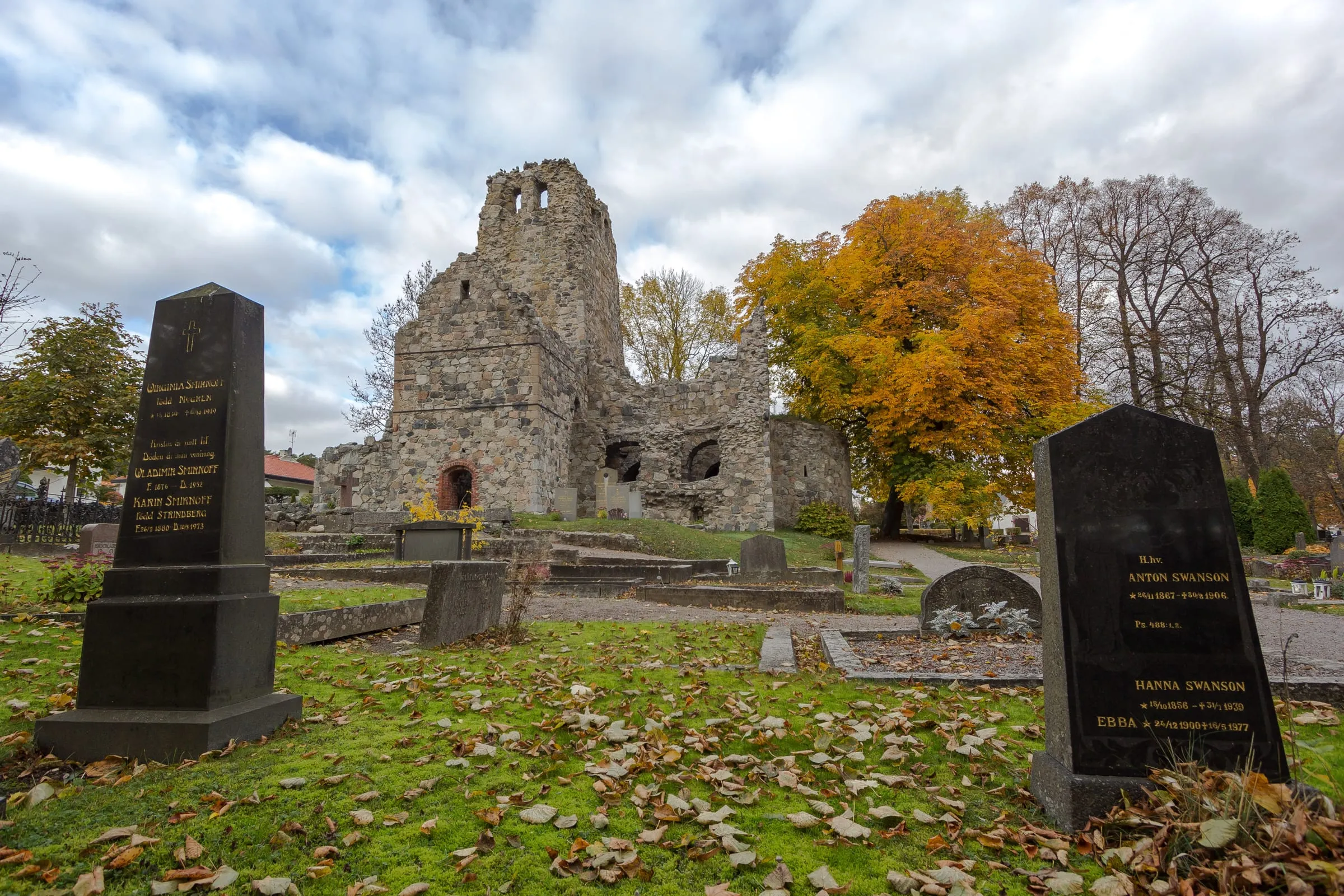
St Peter's church ruin sits on the hill in the western part of town, finished around 1100. Probably the cathedral before the see moved to Old Uppsala around 1130, and closely tied to the crown. Built in two stages: chancel, central tower and nave first, the west tower later. Restored in 2019 and the most complete of the three. Start here. From the hill you see the whole town and the bay.
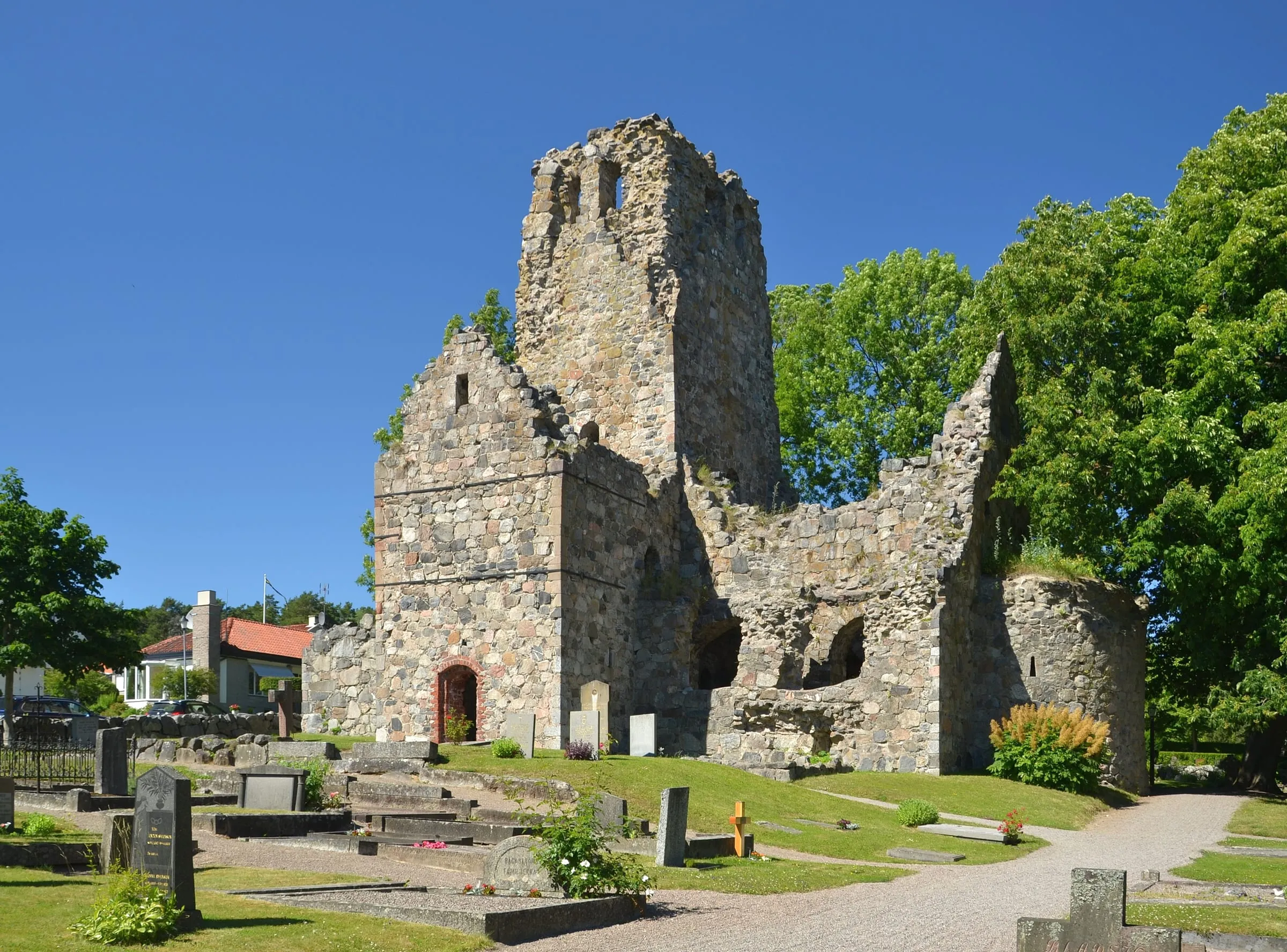
St Olof (Sankt Olof)
St Olof's church ruin stands in the churchyard west of St Mary's, contemporary with St Peter and built in stages: central tower, chancel and transepts around 1100, the nave later and shorter than planned. Next to it is a spring, probably linked to the cult of St Olaf. Excavations in 2005 found the foundations of an older stone church under the floor. The ruin that suits children best: low walls and grass all around.
St Lawrence (Sankt Lars)
St Lawrence's church ruin on Prästgatan is the one with least left: only the collapsed tower. The church was built in the 12th century, used as a school after 1586 and burned in 1658. You pass it between the bus station and the square.
The rune stones
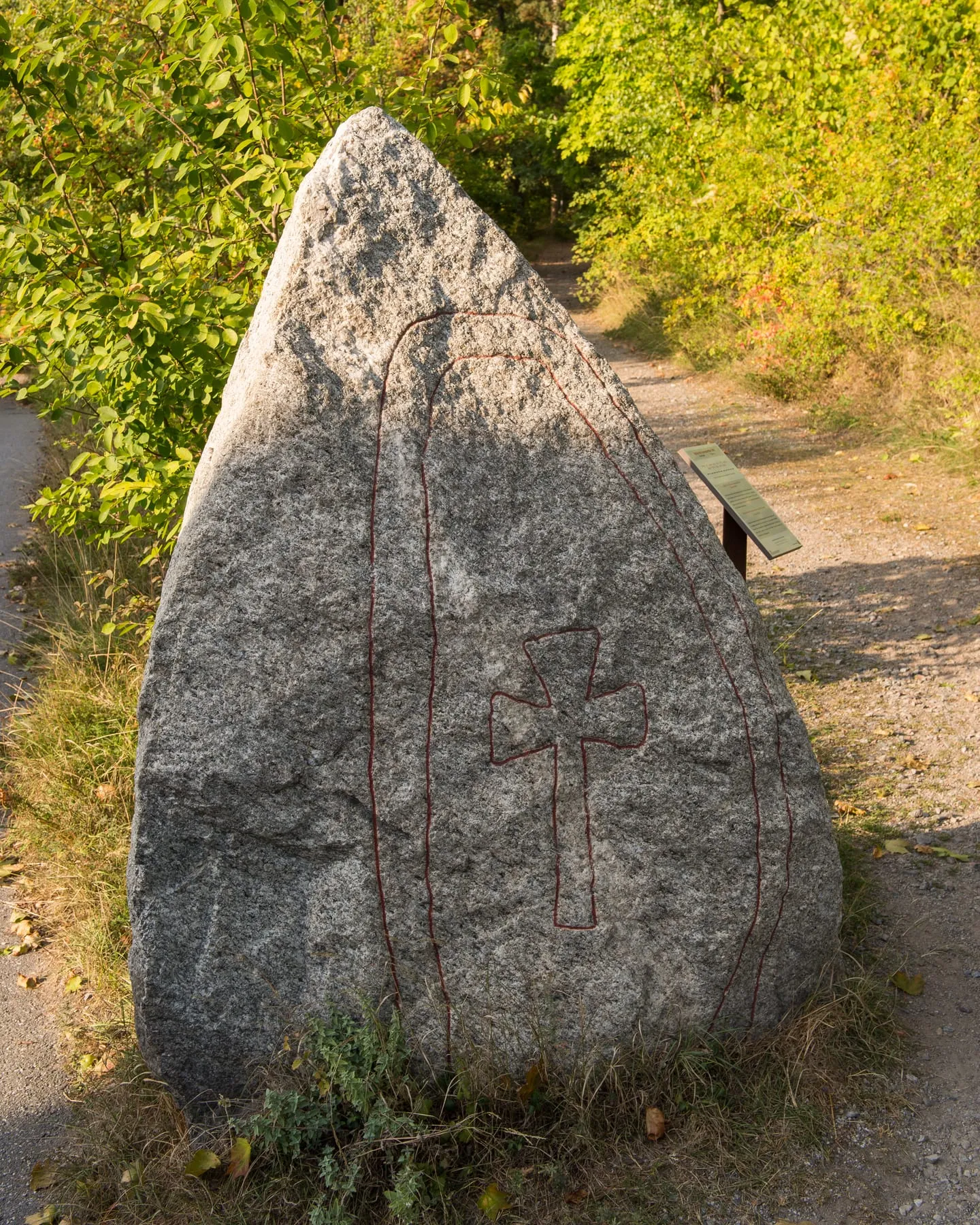
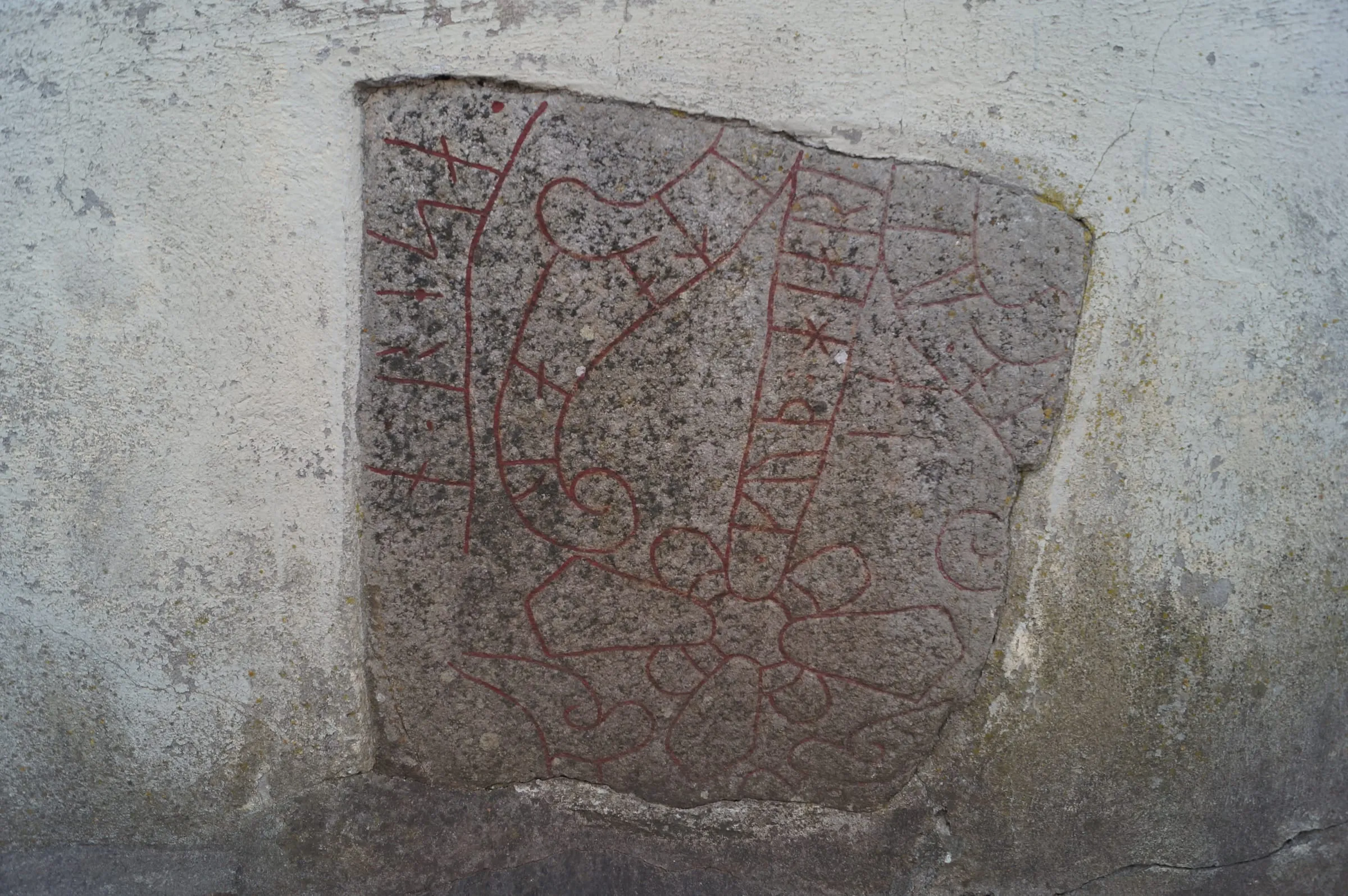
Sigtuna has 35 rune stones, more than any other Swedish town, and they belong with the churches: many were raised in the 11th century by Christians who wanted to remember their dead with a cross and a prayer, and when the stone churches were built in the 12th century, stones were set into walls and churchyard walls. Several are still there. Two of the stones, U 379 and U 391, were raised by the Frisian guild, an association of traders from today's Netherlands and northern Germany, and are counted as the oldest evidence of a guild in Sweden. On a third the town's name is written Sihtunum. It stands in the museum.
- At St Mary's rune stones sit in the churchyard wall and in the buildings beside it, among them U 381.
- At St Peter stones stand on the grass around the ruin.
- Along the streets and in the gardens of the old town there are more. Some were moved from the churches, others found during street works.
- In the museum are some of the stones, and the rune-inscribed bones from the excavations: everyday scribbles on bone from the 11th and 12th centuries.
The museum has the map of the rune stone trail at the reception, and a rune stone hunt for children. Allow two hours if you want to see them all.
The Sigtuna Foundation and the crypt
The Sigtuna Foundation from 1917 is not a church but was built like a monastery, and the crypt under the main building is open for quiet moments. On Thursday evenings in term time there is an open meditation, free. Walk up through the park from town.
Practical
- The ruins are open around the clock, free. They are ancient monuments: climb carefully, take nothing home.
- St Mary's is open in the daytime most of the year. Service on Sundays. Sigtuna parish has the times.
- All three ruins and the church are within ten minutes' walk of each other. Start at St Peter in the west and walk east.
Updated 2026-09-21